Adult tobacco-accessory equipment guide
Why Are Cigarettes So Expensive? The Real Price Stack Explained
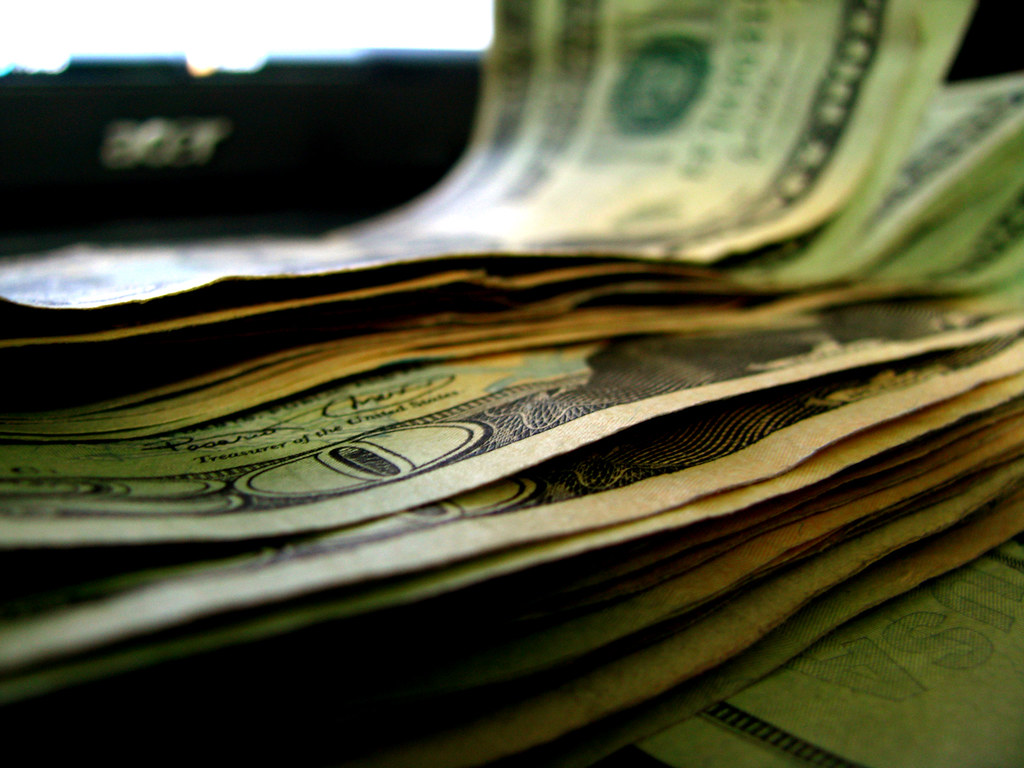
Why are cigarettes so expensive? The short answer: mostly taxes and legal settlements, deliberately. A pack that costs $8–$15 (and past $15 in New York City) contains only a couple of dollars of actual product. The rest is a stack: federal excise tax, state excise taxes ranging from pocket change to more than five dollars, local add-ons in some cities, the tobacco industry’s multi-billion-dollar legal settlement passed straight into prices, sales tax on top of all of it — plus manufacturer increases that have outpaced inflation for decades. And most of that stack exists on purpose: raising prices is public policy’s most effective smoking-reduction tool.
This guide breaks the pack price into its actual layers, explains why prices vary three-fold between states, where the money goes, why RYO tobacco escapes part of the stack (the loophole behind this site’s entire savings math), and what realistically happens to prices from here. 👉
- Anatomy of a pack price
- The federal layer
- The state layer: why $6 here and $15 there
- The settlement layer nobody remembers
- The manufacturer layer
- Why it is this way on purpose
- The RYO tax gap
- Where prices go from here
- Common mistakes (and fixes)
- Pro tips
- Real-world experiences
- FAQ
- The smart-money checklist
Anatomy of a pack price
A representative mid-tax-state pack, layer by layer (illustrative — your state moves every line):
| Layer | Roughly | What it is |
|---|---|---|
| Manufacturing + tobacco | ~$1–1.50 | The actual product — leaf, paper, filter, pack |
| Manufacturer margin + MSA pass-through | ~$2–3 | Profit plus the settlement layer explained below |
| Federal excise tax | $1.01 | Fixed per pack since 2009 |
| State excise tax | $0.17–$5.35 | The big variable — see the state layer |
| Local excise (some cities) | $0–$3+ | NYC, Chicago-area, and others stack extra |
| Retail margin | ~$0.75–1.50 | The store’s cut |
| Sales tax | varies | Charged on the already-taxed total in most states |
The federal layer
The federal excise tax sits at $1.01 per pack, set in 2009 when CHIPRA (a children’s health insurance funding act) raised it from 39 cents — the same law that created the RYO/pipe-tobacco tax gap covered in our tobacco guide. It has not moved since, which quietly means inflation has been shrinking it in real terms for over fifteen years. Periodic proposals to raise or inflation-index it appear in budget seasons; none has passed as of this writing. The federal layer is, ironically, the stable and shrinking part of the stack.
The state layer: why $6 here and $15 there
States tax cigarettes however they like, and the spread is enormous — from under twenty cents per pack at the bottom (Missouri has long anchored it at $0.17) to $5.35 in New York at the top, with a dozen states above $3. Add local stacks — New York City layers its own tax on the state’s, which is how packs there crossed $15 — and identical cigarettes vary three-fold by geography.
- High-tax belt: the Northeast and West Coast dominate the top — NY, CT, RI, MA, CA, WA, plus DC.
- Low-tax belt: tobacco-heritage and low-tax states — MO, GA, NC, VA and neighbors — cluster at the bottom.
- The border economy: the gaps fuel everything from casual cross-border cartons to organized smuggling — untaxed and out-of-state sales are a persistent enforcement headache precisely because the arbitrage is real.
(Exact rates shift with legislative sessions — your state’s revenue department page has today’s number; treat the figures here as the shape of the landscape, current at review date.)
The settlement layer nobody remembers
In 1998, the major tobacco companies signed the Master Settlement Agreement (MSA) with 46 states — resolving lawsuits over smoking-related healthcare costs with payments of over $200 billion across the first 25 years, and continuing in perpetuity. The companies did not absorb that; they raised prices immediately and permanently. Every pack sold since carries a slice of the settlement — a private-lawsuit layer that functions exactly like a tax, invisible on every receipt. It remains one of the largest civil settlements in history, and one of the least-remembered reasons a pack costs what it does.
The manufacturer layer
Here is the counterintuitive part: as smoking rates fell for decades, tobacco companies kept revenue growing by raising prices faster than volume declined — reliable multiple-times-a-year list price increases, well above inflation. A shrinking but deeply brand-loyal, price-tolerant customer base makes this the textbook inelastic market. The practical translation for a smoker: the sticker rises every year even when no legislature touches a rate, and premium-brand loyalty is the single most expensive habit inside the habit.
Why it is this way on purpose
None of this stack is accidental. Decades of research established price as the most effective lever on smoking rates — the standard finding is that meaningful price increases reduce consumption, with the effect strongest among young and price-sensitive smokers. Taxation is therefore public-health policy wearing a revenue hat (and vice versa): states fund programs from the proceeds while the price itself discourages the product taxed. Whatever one thinks of the approach, it has a clear logic — and an honest site notes the corollary: the stack is designed to make you consider quitting, which remains the only move that beats every layer at once (our quit guide covers the tools; 1-800-QUIT-NOW is free).
The RYO tax gap
Loose tobacco is taxed differently than manufactured packs — by weight, at rates that in most states work out far below the per-cigarette equivalent, especially for products classed as pipe tobacco since the 2009 federal reshuffle. Stack the layers side by side and the gap is the entire economics of this site:
| Cost component | Pack cigarettes | RYO equivalent |
|---|---|---|
| Product | ~$1–1.50 | ~$1–1.60 (tobacco + tubes) |
| Federal excise | $1.01 | Weight-based; far lower per stick as pipe tobacco |
| State excise | Up to $5.35+ | Percentage/weight rates, typically much lower per stick |
| MSA layer | Built in | Largely absent |
| Typical per-pack-equivalent | $8–15 | $2–3.60 |
That differential — not machine magic — is why rolling saves 50–75%. The full math, break-evens, and honest caveats live in the worth-it guide and the yield guide; the equipment side starts at the match quiz.
💰 If the price stack sent you here
The two rational responses to a $12 pack, in order:
- 🏆 Beat every layer: the quit toolkit — NRT on Amazon ›
- 🥈 Beat most layers: the RYO route — electric injectors › + king-size tubes ›
As an Amazon Associate we may earn from qualifying purchases.
Where prices go from here
- Up, structurally. Manufacturer increases are quarterly clockwork; state legislatures raise rates far more often than they cut them; and public-health advocacy keeps steady pressure for more.
- The federal wildcard: a $1.01 rate frozen since 2009 is a perennial revenue target; any future increase would be the biggest single jump in the stack.
- The RYO gap persists but narrows in places — several states have moved to close loose-tobacco differentials, which is worth watching if the savings math is your anchor.
- The only fixed point: quitting remains price-proof. Every projection in this section is an argument for the quit guide wearing an economics costume.
Common mistakes (and fixes)
- ❌ Blaming the store. ✅ Retail margin is one of the smallest layers; the register is where the stack becomes visible, not where it is built.
- ❌ Chasing untaxed/border cartons. ✅ Transporting across lines to evade tax is illegal, enforced, and the fines erase years of “savings.” The legal gap is the RYO one.
- ❌ Premium-brand autopilot. ✅ In inelastic markets, loyalty is the product. If price is the complaint, the brand tier is the one layer you control tonight.
- ❌ Treating “prices will drop someday” as a plan. ✅ Four decades of one-directional data disagree. Plan on the trend, not the wish.
- ❌ Reading this as pure victimhood. ✅ The stack is also the world’s bluntest quit nudge — the response it is designed to produce remains available, free, and covered here.
Pro tips 💡
Real-world experiences
- The NYC transplant: moved from Georgia and met $15 packs — “same cigarettes, triple the price, all geography.” The state-layer lesson in one relocation; she quit within the year and credits the sticker shock.
- The MSA discoverer: a curious smoker who traced the 1998 settlement after wondering why prices jumped that decade — “I’d been paying a lawsuit for twenty years without knowing.”
- The gap arithmetician: a pack-a-day smoker in a $4-tax state who ran the RYO numbers, cut costs 70%, then used the visible savings pile as his quit fund a year later. Both rational responses, in sequence.
FAQ
Why are cigarettes so expensive?
Layered taxes (federal $1.01 + state up to $5.35+ + local + sales tax), the 1998 settlement passed into prices, and decades of manufacturer increases above inflation. In high-tax areas, well over half the price is the stack, not the product.
Why do cigarette prices differ so much between states?
State excise taxes range from $0.17 to $5.35 per pack, and some cities add their own on top — identical products, three-fold price spread by geography.
What was the Master Settlement Agreement?
The 1998 agreement in which major tobacco companies committed $200+ billion to 46 states over 25 years (and payments continuing) to settle healthcare lawsuits — costs passed permanently into pack prices.
Will cigarette prices ever go down?
The forty-year trend is one-directional, by policy design and industry pricing strategy. Planning should assume continued increases.
Why is rolling tobacco so much cheaper?
Loose tobacco is taxed by weight at far lower per-stick rates (especially pipe-classed tobacco after 2009) and largely escapes the settlement layer — the structural gap behind RYO’s 50–75% savings.
Is buying cheap cigarettes across state lines legal?
Small personal amounts occupy grey zones that vary by state; transporting quantities across lines to evade tax is straightforwardly illegal and enforced. The durable legal responses to the price stack are RYO — or quitting.
The smart-money checklist ✅
- ☐ Look up your state’s excise rate — know your stack.
- ☐ Compute your annual spend in the calculator.
- ☐ Price the quit option first — it beats every layer (guide).
- ☐ Staying a smoker? Run the RYO math against your numbers.
- ☐ Skip tax-evasion “deals” — the legal gap is the loose-tobacco one.
- ☐ Re-audit yearly: rates move, gaps narrow, and quit tools improve.