What is the best tobacco for a rolling machine? Here is the point, right up front: your injector does not care about brand names — it cares about cut width and moisture. A medium, shag-style cut with a slow 2–3 second springback feeds almost any machine beautifully; bone-dry dust and chunky ribbon jam almost every machine eventually. Get those two properties right and cheap tobacco rolls like a dream; get them wrong and premium tobacco rolls like gravel.
This guide explains tobacco purely from the equipment side — the cut spectrum decoded, why the bags are confusingly labeled “pipe tobacco” (a genuinely interesting tax story), how to match cut to your machine class, and a troubleshooting table that tells you when the tobacco (not the machine) is your problem. No brand rankings, no health claims — just what feeds well and why. 👉
- The only two properties your machine cares about
- The cut spectrum, decoded
- Why the bag says “pipe tobacco” (the tax story)
- Moisture: the 40% factor
- Matching cut to machine class
- Pouches vs bags vs bulk
- The 2-minute prep workflow
- Is it the tobacco or the machine? (table)
- Common mistakes (and fixes)
- Pro tips
- Real-world experiences
- FAQ
- Buying checklist
The only two properties your machine cares about
Strip away the packaging and marketing, and an injector machine evaluates tobacco on exactly two axes:
- ✂️ Cut width — how finely the leaf is shredded. This controls how tobacco flows through the feed slot, how densely it packs, and whether strands bridge across the channel and cause gaps.
- 💧 Moisture content — how much water the leaf holds. This controls whether strands slide smoothly (right), crumble to clogging dust (too dry), or mat into a felt-like plug (too damp).
Everything else — leaf variety, flavor notes, brand reputation — matters to your taste, not to the machine. That is liberating for your wallet: once you know which cut and moisture your machine likes, you can choose among everything that matches, including the budget shelf. It also explains a mystery every RYO forum sees weekly: two people, identical machines, opposite experiences. One feeds a medium shag at perfect moisture; the other feeds dry bargain dust. Same hardware, different physics.
The cut spectrum, decoded
Retail descriptions are inconsistent, so here is the practical spectrum from finest to coarsest, with how each behaves in a machine:
Fine shag (very thin strands)
Hair-thin shreds that pack densely and fill fast. In moderation this is good — European hand-rollers love fine shag — but in an injector it can overpack, producing tight draws and stressing the tube tip. Works best with the density dialed down a notch. When fine shag also runs dry, it becomes dust that packs into the feed-slot corners: the classic slow-motion jam.
Medium shag (the sweet spot)
Strands roughly the width of spaghetti, loosely springy in the hand. This is the cut injector manuals are silently written around: flows without bridging, packs evenly, holds together in the tube. If you are new, start here and give the machine its best chance while you learn — the same advice as our RYO starter guide.
Ribbon cut (wider, flatter strips)
Common in products actually blended for pipes. Feeds acceptably in strong machines but bridges across narrower feed channels — the strands lay across the slot like planks and hold back the tobacco above, causing alternating loose and normal sticks. Snipping or briefly fluffing helps; a heavy-duty feed handles it better than a compact.
Coarse / broken flake
Chunky pieces, sometimes partially pressed. Built for pipe bowls, not feed channels. Expect bridging, gaps, and jams unless you break it down substantially first — at which point you have done the factory’s job by hand. Generally not worth the effort for machine rolling.
Why the bag says “pipe tobacco” (the tax story)
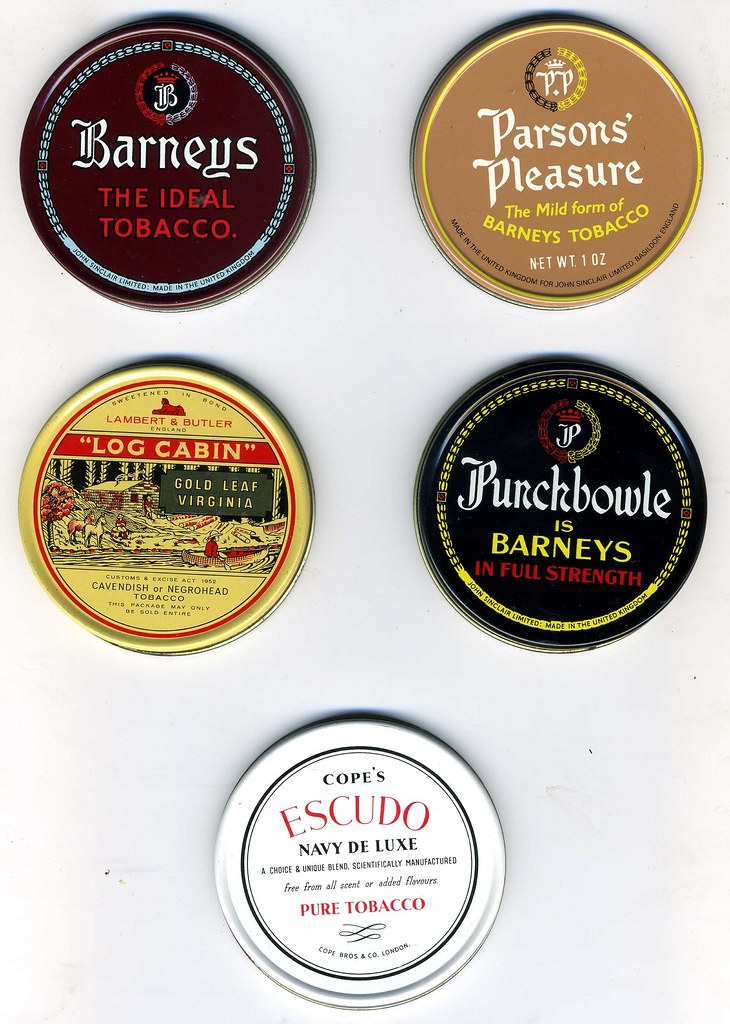
Walk into any tobacconist and you will find big value bags labeled “pipe tobacco” that look suspiciously like cigarette cut. There is a real story here, and knowing it makes you a smarter shopper.
In 2009, a federal law (the children’s health insurance funding act, CHIPRA) raised the federal excise tax on roll-your-own cigarette tobacco by over 2,000% — while the tax on pipe tobacco rose far less. The result was a price gap of many dollars per pound between two legal categories. Manufacturers responded exactly as you would guess: many RYO-style products were reformulated slightly, relabeled as pipe tobacco, and sold at pipe-tobacco tax rates. Regulators have debated the boundary ever since, but a decade and a half later the shelves still work this way.
What it means for machine owners, practically:
- The label tells you the tax category, not the cut. A “pipe tobacco” bag may hold a machine-friendly medium shag or a genuinely pipe-oriented ribbon — you have to look at the tobacco itself.
- True pipe blends often carry heavier casings (flavor coatings) and higher moisture, which can gum feed mechanisms — another reason the eyeball-and-squeeze inspection beats the label.
- Prices differ between the categories for tax reasons, not quality reasons. Judge the leaf, not the legal wording.
Key insight: in the American RYO aisle, “pipe tobacco” is frequently a tax label, not a usage instruction. Your eyes and fingers grade the cut and moisture; the bag text mostly grades the paperwork.
Moisture: the 40% factor
Our perfect-stick system attributes roughly 40% of all quality problems to tobacco prep, and moisture is most of that. The full test and fixes live in the storage guide; here is the machine-side summary:
| State | Squeeze test result | Machine behavior | Fix |
|---|---|---|---|
| ✅ Right | Springs back over 2–3 seconds | Smooth feed, even fills | Roll now; store sealed |
| ❌ Too dry | Crackles, stays crushed | Loose fills, shedding tips, dust clogs | 48h jar + two-way humidity pack |
| ❌ Too damp | Clumps into a cool, heavy ball | Matting, hard plugs, motor strain | Jar cracked open a few hours; retest |
🧷 Protect whatever you buy: the storage kit
The best-feeding tobacco in the world turns to machine-jamming dust in an open pouch. Two items keep it session-ready for months.
- ✅ Treehouse airtight jars on Amazon ›
- ✅ Two-way humidity packs on Amazon ›
- ✅ Full method in our tobacco storage guide
See Treehouse airtight jars on Amazon ›
As an Amazon Associate, ElectricCigaretteMachines.com may earn from qualifying purchases.
Matching cut to machine class
| Machine class | Happiest cut | Tolerates | Avoid |
|---|---|---|---|
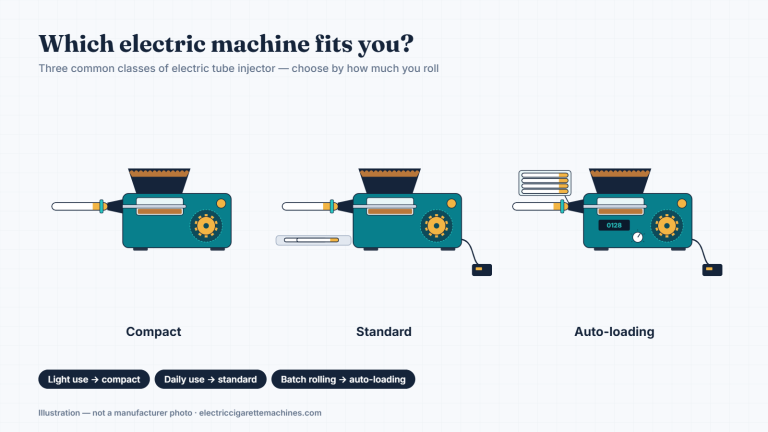
| Compact electric | Medium shag | Fine shag (density down) | Ribbon, flake |
| Beginner electric | Medium shag | Fine shag, light ribbon | Flake |
| Heavy-duty electric | Medium shag | Ribbon, most fine cuts | Unbroken flake |
| Premium electric | Medium shag | Wide range — tightest tolerances | Flake |
| Manual injector | Medium shag | Almost anything, slowly | Nothing is fast enough to jam it badly |
Notice the pattern: medium shag wins every row. The classes differ mainly in how gracefully they forgive departures from it. If you are still choosing a machine, that forgiveness is worth weighing — the comparison guide and match quiz both factor it.
⚡ The other half of the equation: the machine
Cut and moisture are half of feed quality; the injector class is the other half. Heavy-duty feeds forgive coarse cuts; compacts want finer prep.
| Best all-rounder | Beginner-class electric injector — handles medium cuts happily |
|---|---|
| Coarse-cut tolerance | Heavy-duty class — stronger feed, wider channel |
| Guides | Best automatic machines · 60-second match quiz |
Check the Powermatic 2 price on Amazon ›
As an Amazon Associate, ElectricCigaretteMachines.com may earn from qualifying purchases.
Pouches vs bags vs bulk
- Small pouches (30–50g): the correct format for testing — a new cut auditions in a pouch, never in a pound bag. Highest per-gram price, lowest regret.
- Medium bags (6–8oz): the daily roller’s standard once a blend has passed the audition. Decant into jars on day one.
- Bulk (1lb+): the best per-gram math and the biggest storage responsibility. Only for proven blends, portioned immediately per the storage guide. A pound of neglected tobacco is the most expensive dust you will ever sweep off a tray.
Where to buy: licensed tobacconists and tobacco retailers, in person or online where your state allows, with 21+ verification. Not Amazon — Amazon bans tobacco sales entirely (our affiliate links here are for equipment and accessories only, which is also why you will never see us link a tobacco brand).
The 2-minute prep workflow
- Decant and inspect. New bag onto the tray in good light: check cut width against the spectrum above, pick out stems and hard bits — the #1 first-session jam cause.
- Squeeze test. 2–3 second springback or fix it first (see moisture table).
- Fluff, do not shred. Gently separate clumps with fingertips. You are un-compressing, not re-cutting.
- Load level. Hopper filled loosely level — never crammed. Compression belongs at the injection end, not the feed end.
- One test stick. Judge, adjust density one notch if needed, then batch. Full method in the consistency system.
Is it the tobacco or the machine? (table)
The eternal RYO question, answered symptom by symptom:
| Symptom | If it is the tobacco… | If it is the machine… | Quick differentiator |
|---|---|---|---|
| Loose, shedding sticks | Too dry (most common) | Worn spoon | Squeeze test first; spoon inspection second |
| Repeated jams | Damp, chunky, or stemmy | Dirty feed slot | Jams right after a deep clean = tobacco |
| Alternating loose/normal sticks | Ribbon bridging in the channel | Low hopper level | Refill hopper; if it persists, the cut is bridging |
| Hard plugs, tight draw | Fine cut + density too high | Residue narrowing the channel | Drop density one notch; clean if no change |
| Motor labors (electric) | Damp matting | Drive problem | Dry the tobacco first — motors rarely lie |
Structured version with more branches: the jam troubleshooting tool.
Common mistakes (and fixes)
- ❌ Buying a pound of an untested blend. ✅ Pouch first. The audition rule has no exceptions.
- ❌ Trusting the label over your eyes. ✅ “Pipe tobacco” is often a tax category; grade the actual cut and moisture.
- ❌ Feeding heavily-cased aromatic pipe blends. ✅ Sticky casings gum feed mechanisms and demand extra cleaning. If you love them, expect maintenance debt.
- ❌ Blaming the machine before the squeeze test. ✅ Two seconds of testing beats an hour of disassembly — the troubleshooting table above, in order.
- ❌ Leaving the session’s tobacco out “for tomorrow.” ✅ Back in the jar, every time. Tomorrow’s jam is tonight’s open pouch.
- ❌ Chasing “stronger” blends for economy. ✅ Watch total consumption instead — cheap sticks that multiply are not cheap, and no blend choice changes the health math.
Pro tips 💡
Real-world experiences
- The label learner: bought the cheapest “pipe tobacco” bag expecting cigarette cut, got heavy aromatic ribbon, and spent a weekend cleaning casing residue out of the feed slot. Now inspects through the bag window first — the tax-label lesson, learned the sticky way.
- The two-bag blender: couldn’t give up a ribbon-cut favorite, discovered the 50/50 carrier trick from a forum thread, and reports zero bridging since. The most upvoted kind of RYO advice for a reason.
- The audition convert: after three pound-bag regrets, adopted the pouch-first rule and a one-line notebook. Says the notebook “paid for a machine upgrade” in avoided waste inside a year. Boring habits, real money.
FAQ
What is the best tobacco for a rolling machine?
Any blend with a medium shag-style cut at proper moisture (2–3 second springback). Cut and moisture — not brand — determine feed quality, so audition small pouches and let your machine vote.
Can I use pipe tobacco in a cigarette rolling machine?
Often yes — much American “pipe tobacco” is machine-friendly cut sold under a different tax label. But genuinely pipe-oriented ribbon, flake, and heavily-cased aromatics feed poorly. Judge the cut you can see, not the words on the bag.
Why does my tobacco keep jamming the machine?
In order: wrong moisture, stems and chunks, cut too coarse or too fine for your machine class, then actual machine issues. Run the squeeze test and the jam tool before blaming hardware.
Why is pipe tobacco cheaper than RYO tobacco?
A 2009 federal tax change raised RYO cigarette tobacco taxes dramatically more than pipe tobacco taxes, so pricing follows the tax category. Quality does not — inspect the leaf.
Can I buy rolling tobacco on Amazon?
No — Amazon prohibits all tobacco sales. Buy from licensed tobacconists with 21+ verification; Amazon is where the equipment and storage gear live.
Does tobacco choice change the health risks?
No. Cut, label, price, and blend change how tobacco feeds and tastes — nothing changes that smoking is harmful and addictive. If quitting is on your mind, 1-800-QUIT-NOW is free and effective.
Buying checklist ✅
- ☐ Confirm 21+ and buy from licensed retailers only.
- ☐ Look at the cut through the bag: medium shag is the target.
- ☐ Audition every new blend in a small pouch first.
- ☐ Squeeze test before the hopper — every session.
- ☐ De-stem and fluff on the tray; load level, never crammed.
- ☐ One test stick, then batch.
- ☐ Decant into airtight jars with a humidity pack the day you buy.
- ☐ Keep the one-line audition notebook.