Adult tobacco-accessory equipment guide
How Nicotine Works: The Plain-English Science of the Hook
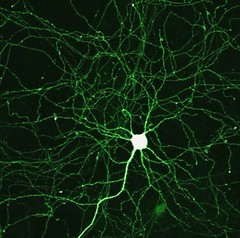
How does nicotine actually work? The mechanics in one paragraph: inhaled nicotine reaches your brain in about 10–20 seconds — faster than an IV drip — where it docks onto receptors that trigger a burst of dopamine, the brain’s “that was good, do it again” signal. With repetition, the brain grows MORE of those receptors, then feels their emptiness between doses as irritability, restlessness, and craving. The cigarette then “fixes” the discomfort it created — the tightest little loop in consumer chemistry. That loop, not weak will, is why quitting is hard.
Understanding the machinery is genuinely useful: it explains why the first cigarette of the day feels strongest, why cravings arrive on schedule, why patches work differently than gum, and why day three of quitting is the famous wall. This guide is the plain-English science — receptors, half-life, tolerance, withdrawal timeline, and what each nicotine product does differently to the same brain circuitry. Not medical advice; genuinely useful anatomy of the habit. 👉
- The 10-second hit: speed is the hook
- Receptors and dopamine, plainly
- Tolerance: why the brain grows more locks
- Half-life: why cravings run on a clock
- The withdrawal timeline, hour by hour
- Same drug, different delivery: product speed table
- What nicotine does and does not cause
- The other half: the habit loop
- Common misunderstandings (and corrections)
- Useful-knowledge tips
- FAQ
- The know-your-enemy checklist
The 10-second hit: speed is the hook
Addiction research keeps landing on the same finding: the faster a drug reaches the brain, the more addictive the delivery. Smoking is the speed champion — nicotine rides smoke particles deep into the lungs, crosses into arterial blood, and hits the brain in 10–20 seconds, arriving as a sharp spike rather than a gentle rise. The brain learns fastest from immediate consequences, and a 15-second reward wires the lesson “cigarette → relief” with industrial efficiency.
This single fact organizes the whole nicotine landscape: nicotine-salt vapes engineered smoother, faster delivery (the JUUL story in one sentence); pouches and snus deliver slower mouth-absorbed curves; and cessation products deliberately go SLOW — a patch takes hours — precisely to break the spike-reward wiring while still feeding the receptors. Speed is the addiction lever, in both directions.
Receptors and dopamine, plainly
Your nervous system runs partly on acetylcholine, a messenger chemical with its own docking stations — receptors — scattered through brain and body. Nicotine happens to fit those docks (they are literally named nicotinic acetylcholine receptors). When nicotine docks in the brain’s reward circuitry, it triggers a release of dopamine — the learning-and-motivation signal that stamps “whatever just happened, repeat it.”
Alongside dopamine, nicotine nudges other messengers — adrenaline (the slight lift and heart-rate bump), and modulators tied to mood and appetite — which is why smokers report it both perks them up AND calms them down. The “calm,” mostly, is subtler than it feels: much of what a cigarette relieves is the withdrawal from the previous cigarette. The relaxation is real to experience — and manufactured by the loop itself.
Tolerance: why the brain grows more locks
Flood receptors regularly and the brain adapts with a strange move: it builds more of them (upregulation). More receptors means more emptiness when nicotine levels drop — experienced as edginess, poor focus, and the itch for the next one. Tolerance also builds within each day: receptors desensitize with successive cigarettes, which is why the first of the morning — meeting fully resensitized receptors after a night’s abstinence — hits hardest, and why evening cigarettes feel like maintenance rather than reward.
The hopeful flip side: upregulation reverses. Weeks into abstinence, receptor counts drift back toward non-smoker levels — the biological reason cravings genuinely fade rather than merely being outlasted. The quit guide’s entire medication strategy is bridge-building across that receptor-normalization window.
Half-life: why cravings run on a clock
Nicotine’s half-life in the body is roughly two hours — half the dose is metabolized (mostly by the liver, into cotinine) within about 120 minutes. Map that onto a pack-a-day rhythm and the schedule explains itself: blood levels sag noticeably 45–90 minutes after a cigarette, the brain flags the dip, and the smoker “spontaneously” wants a break. The craving clock is pharmacokinetics wearing the costume of preference.
Two practical corollaries: overnight, levels fall near zero — hence the morning cigarette’s urgency and its use in dependence screening (“how soon after waking?” is the classic severity question). And cotinine, the metabolite, lingers for days — it is what nicotine tests actually measure long after the buzz is gone.
The withdrawal timeline, hour by hour
| Time since last dose | What the brain and body are doing |
|---|---|
| 30 min – 4 hours | Levels sag; first cravings and restlessness surface |
| ~10 hours | Near-empty receptors; sleep may be restless; morning urgency |
| 24 hours | Irritability and appetite changes ramp |
| 48–72 hours | The peak — receptors at maximum emptiness; headaches, fog, the famous wall |
| Days 3–14 | Physical symptoms fade steadily; habit-cue cravings continue |
| 2–4 weeks | Most physical withdrawal resolved; receptor counts normalizing |
| Months | Occasional cue-triggered cravings — psychological echoes, brief and survivable |
The strategic reading: withdrawal is a front-loaded, finite process — brutal early, measurably shrinking after 72 hours, mostly done in weeks. Every tool in the quit guide exists to flatten that early spike, which is exactly when unaided attempts fail.
Same drug, different delivery: product speed table
| Product | Brain-arrival speed | Curve shape | Addiction reinforcement |
|---|---|---|---|
| Cigarette (smoked) | 10–20 seconds | Sharp spike | 🔴 Maximum |
| Nicotine-salt vapes | ~30 seconds | Fast, smooth spike | 🔴 Very high |
| Pouches / snus | 5–15 minutes | Rounded hill | 🟡 Moderate-high |
| Nicotine gum / lozenge | 15–30 minutes | Gentle hill | 🟢 Low-moderate |
| Patch | 2–4 hours to steady state | Flat plateau | 🟢 Lowest |
Read bottom-up and the cessation logic writes itself: the patch feeds receptors without teaching spikes; gum adds small controllable hills for cravings; and the taper walks receptor counts down gently. Same molecule as the cigarette — opposite curriculum.
💊 The slow-curve toolkit
The deliberately-slow deliveries above are the FDA-approved quitting aids — the one nicotine category Amazon carries:
- ✅ Patches › — the flat plateau
- ✅ Gum › — controllable hills
- ✅ Lozenges › — technique-free rescue
As an Amazon Associate we may earn from qualifying purchases. Dosing guidance: your pharmacist, and the quit guide.
What nicotine does and does not cause
Precision matters here, in both directions:
- Nicotine is the addiction, not the main carcinogen. The cancers and lung disease of smoking come overwhelmingly from combustion — tar, carbon monoxide, and thousands of burn products (the smoke itself). This is why the risk continuum in our smokeless guide exists at all.
- But nicotine is not harmless. It raises heart rate and blood pressure, stresses cardiovascular systems, is genuinely dangerous in pregnancy (fetal development), harms adolescent brain development, and is toxic in concentrated doses — liquid nicotine and pouches must be kept from children and pets, full stop.
- The honest summary: nicotine is the hook; smoke is the harpoon. Removing combustion removes most — not all — of the danger, while the hook remains fully a hook. No product below cigarettes on the continuum is “safe”; the only zero-risk dose is zero.
The other half: the habit loop
Receptors explain the chemistry; they do not explain why cravings strike at the coffee, the car, the phone call. That is conditioned association: hundreds of daily pairings teach the brain that certain cues predict nicotine, until the cue alone fires the craving — sometimes years into abstinence. This is why purely pharmacological quitting under-performs: the patch silences the receptors while the coffee cup still shouts. It is also why the quit plan maps triggers with substitutes, and why rituals-with-hands (the whole RYO batch routine, honestly) bind the habit tighter than pack-buying ever did. Chemistry and choreography — quitting dismantles both, and knowing which one is talking at any given moment is half the fight.
Common misunderstandings (and corrections)
- ❌ “Nicotine causes the cancer.” ✅ Combustion products drive smoking’s cancers; nicotine drives the returning for more. Both facts matter; conflating them distorts every product decision.
- ❌ “Cigarettes genuinely relax me.” ✅ Mostly they relieve the withdrawal they caused. Non-smokers do not walk around missing that calm; the loop manufactures its own demand.
- ❌ “NRT just swaps one addiction for an equal one.” ✅ Delivery speed IS the addictiveness dial; slow curves maintain without reinforcing, and taper off with far higher success than cold turkey.
- ❌ “Withdrawal lasts months.” ✅ The physical storm peaks at 72 hours and largely resolves in 2–4 weeks. What lingers are brief cue-echoes — real, but a different, weaker enemy.
- ❌ “Everyone’s nicotine is the same.” ✅ Metabolism genetics vary — faster metabolizers smoke more and often quit harder, one reason personalized medical advice beats internet rules of thumb (including ours).
Useful-knowledge tips 💡
FAQ
How fast does nicotine reach the brain?
Smoked: about 10–20 seconds. Vaped: ~30 seconds. Oral products: minutes to half an hour. Patches: hours. Speed of arrival is the core of how addictive each format is.
How long does nicotine stay in your system?
Nicotine’s half-life is ~2 hours, so it clears largely within a day; its metabolite cotinine lingers for several days and is what most tests detect.
Why is the first cigarette of the day the strongest?
Overnight abstinence resensitizes receptors and empties blood levels — the morning dose meets a reset system at full receptivity.
How long does nicotine withdrawal last?
Physical symptoms peak around 48–72 hours and mostly resolve within 2–4 weeks. Cue-triggered psychological cravings can echo longer but arrive briefly and fade with each month.
Is nicotine itself harmful?
It is addictive, cardiovascular-active, harmful in pregnancy and adolescence, and toxic in concentrated forms — but the major smoking diseases come from combustion smoke, not nicotine. Neither fact excuses the other.
Why do patches work if nicotine is the addiction?
Because addiction rides on delivery speed. A patch’s flat, slow curve feeds receptors without teaching the spike-reward loop — maintenance without reinforcement, built for tapering to zero.
The know-your-enemy checklist ✅
- ☐ Understand the loop: spike → dopamine → more receptors → emptiness → repeat.
- ☐ Clock your own ~90-minute rhythm for two days.
- ☐ Answer the morning-cigarette question honestly.
- ☐ Learn the 72-hour peak — and plan tools to flatten it (quit guide).
- ☐ Separate chemistry cravings from cue cravings when they hit.
- ☐ Keep concentrated nicotine products away from children and pets, always.
- ☐ Remember the direction of mercy: slow curves down, never fast spikes up.